Hoboken, where I live, has become famous for eliminating traffic deaths. We haven't had a traffic death since January 2017 - nearly 9 years.
As a parent who pushes a toddler around town, the most impactful thing about Hoboken's Vision Zero plan has been the focus on intersection daylighting. Daylighting is the act of taking an intersection...
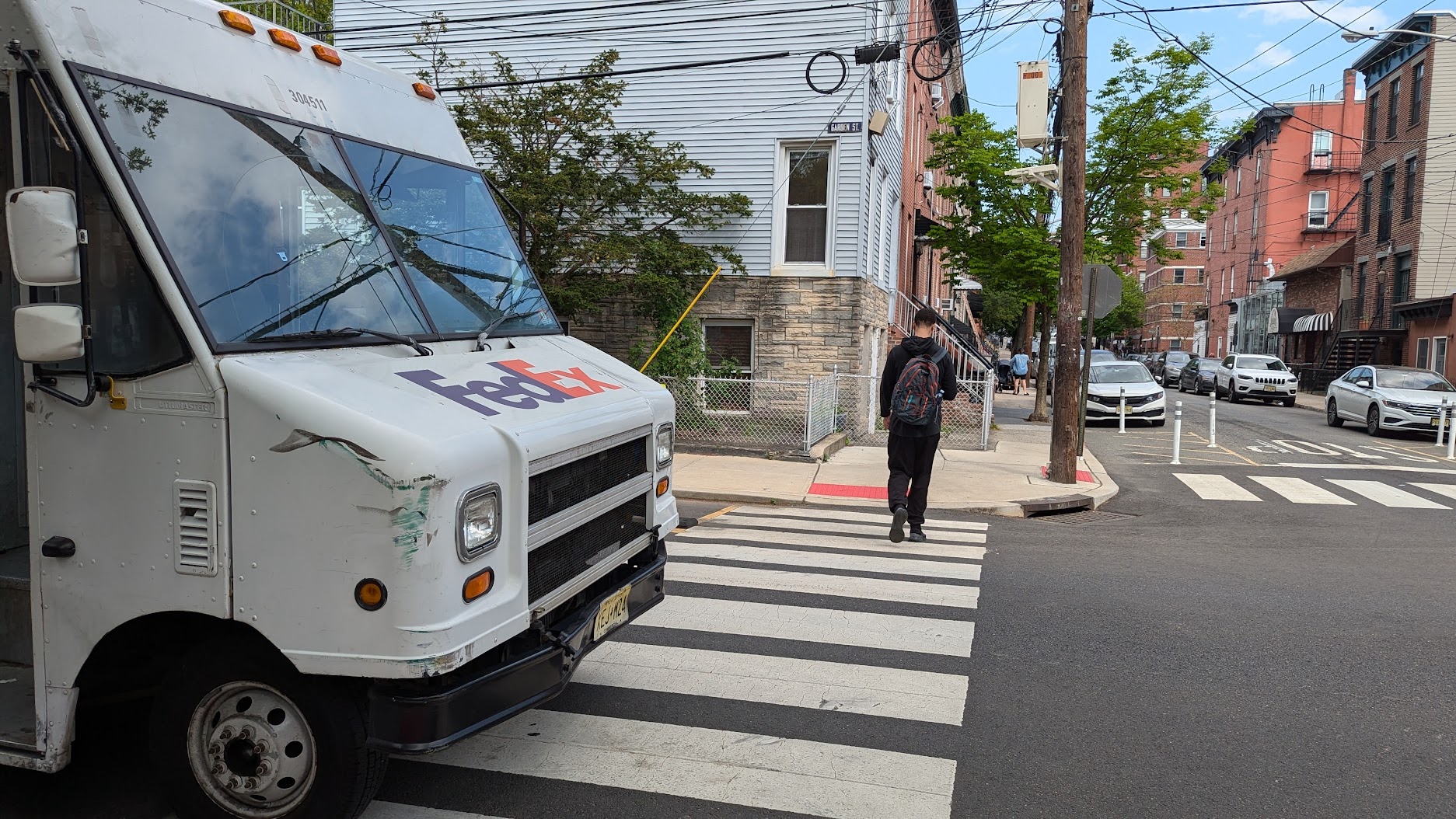
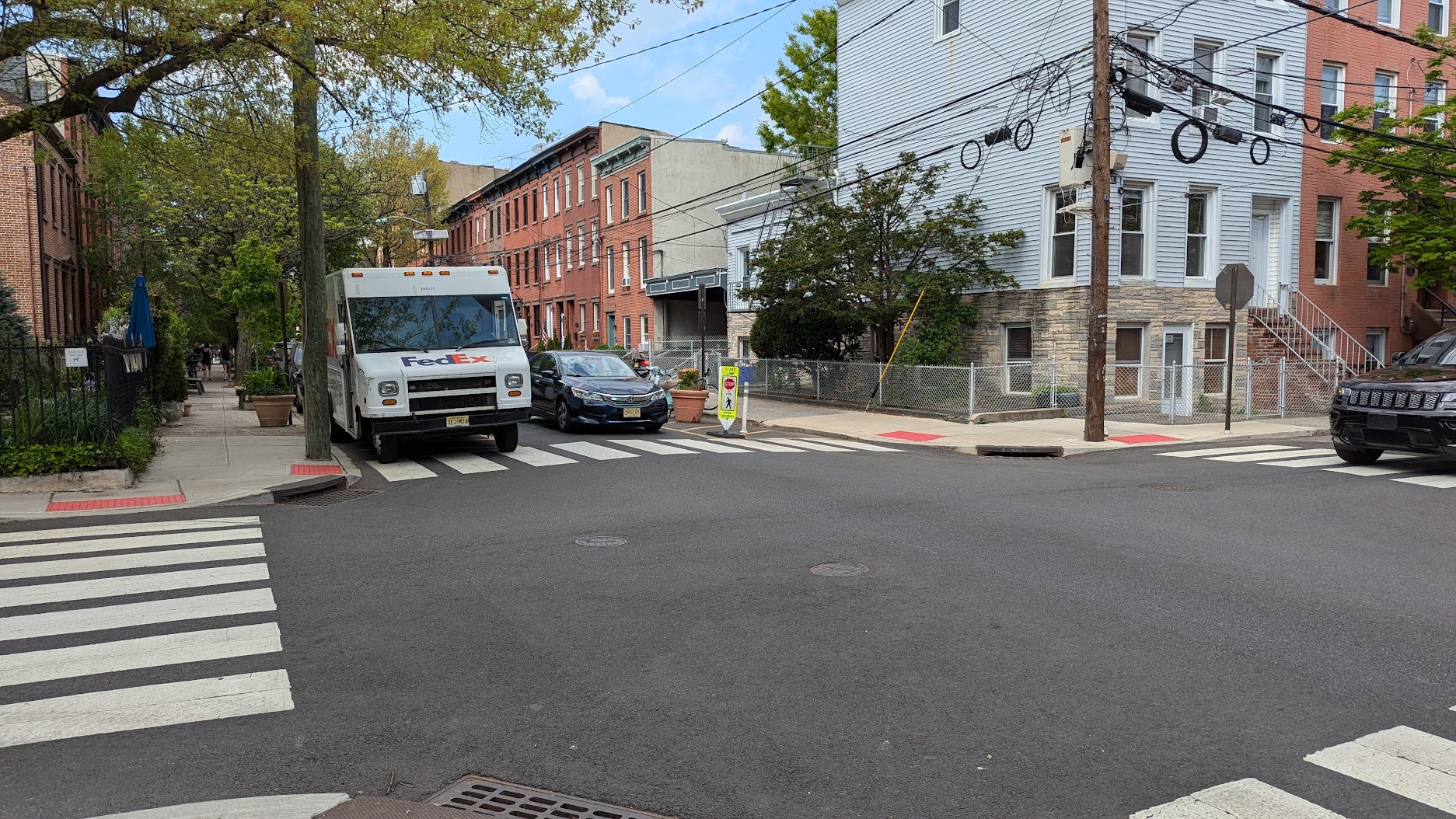
A FedEx truck blocking visibility at a intersection in Hoboken.
...and improving the visibility so that people crossing and motorists entering the intersection can clearly see each other:
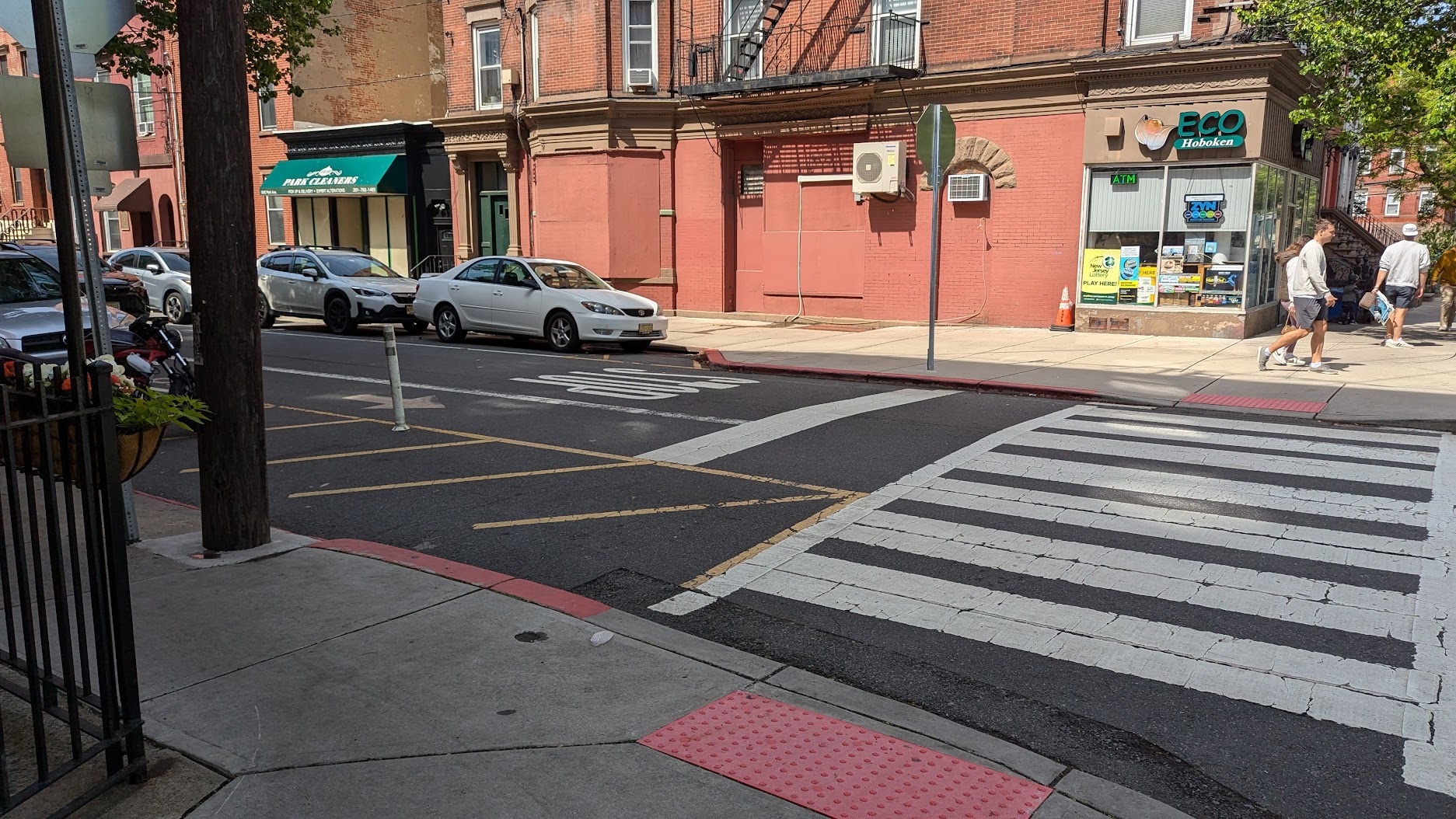
A daylighted intersection in Hoboken where you can clearly see cars approaching.
Pushing a stroller is even scarier when your visibility is blocked, because strollers typically stick out 3 or so feet in front of you. Imagine waiting here to cross:
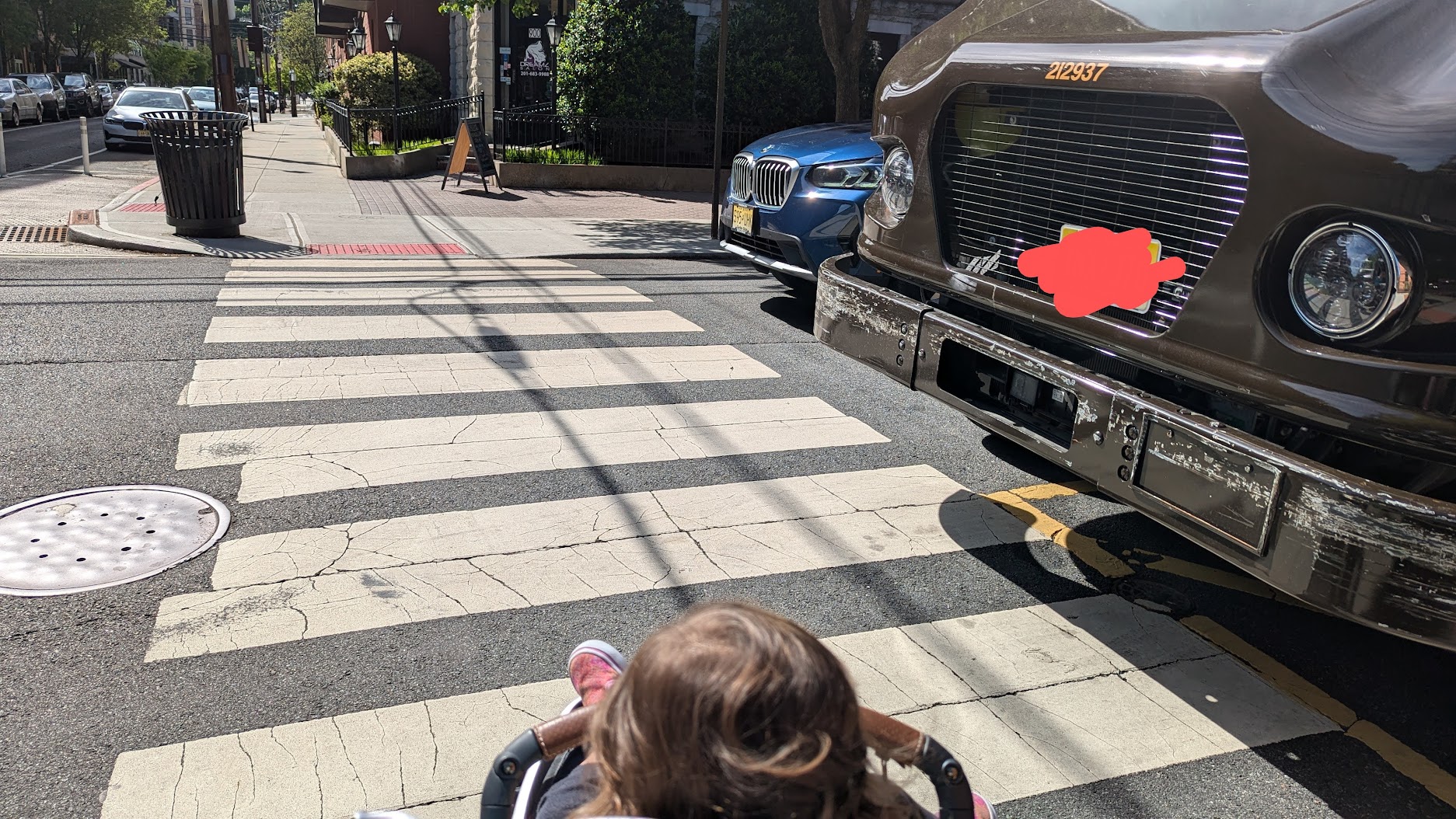
A UPS truck blocking visibility of an intersection while I am pushing a stroller.
Would you ever feel safe enough to cross? I don't feel comfortable and will try to swing out, yet we continue to see people cross intersections like these with less precaution than I have. A non-daylit intersection is a death trap waiting to happen, as a car could drive through your stroller as you're about to cross before you ever have time to see it. It's not the fault of the driver either. You have no idea if there's anybody standing in front of this FedEx truck:
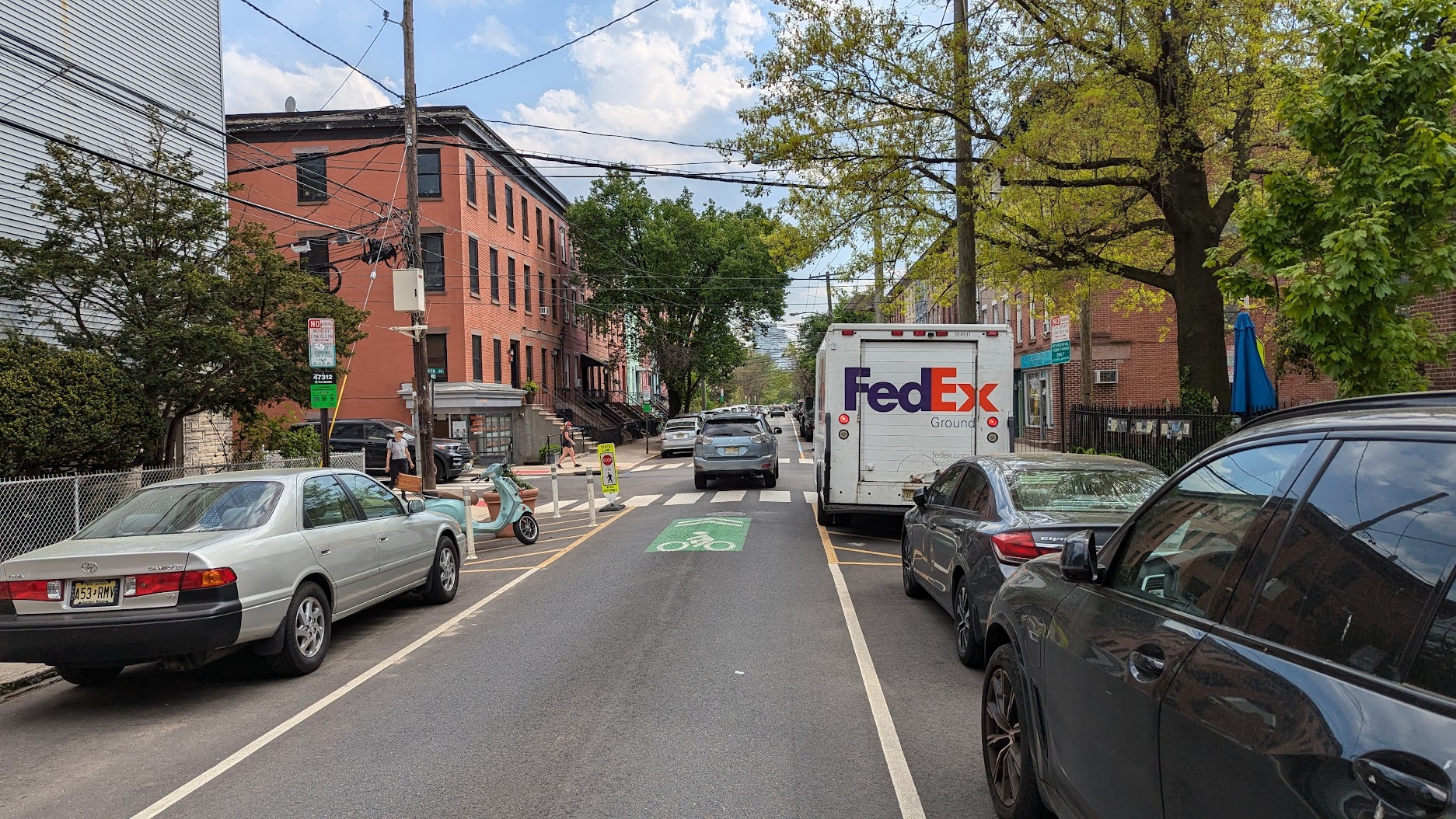
Is there anything hiding behind this truck as I approach this intersection in Hoboken?
Cars have a forward blind zone...
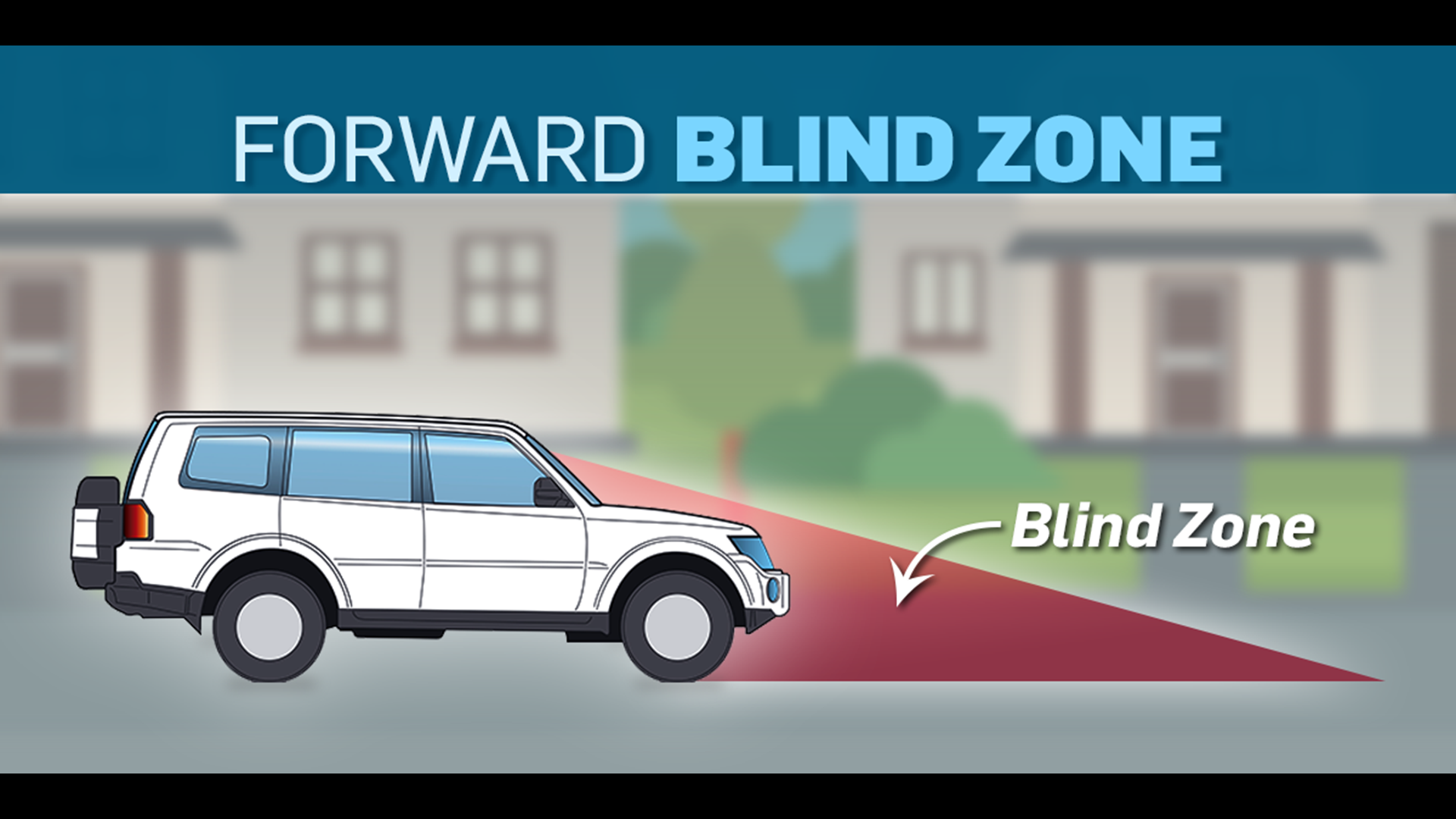
Diagram showing the front blind zone of a vehicle.
...so even if everyone did everything right - the driver slowing down to 15mph as they enter the intersection, the parent waiting patiently to cross - a stroller or even a walking child could easily poke out below the driver's line of sight and result in a fatal collision without anybody seeing it about to happen.
Compare that to this daylit intersection, where cars are forbidden to park close to the crosswalk, where both the driver and the pedestrian have a clear view of each other:
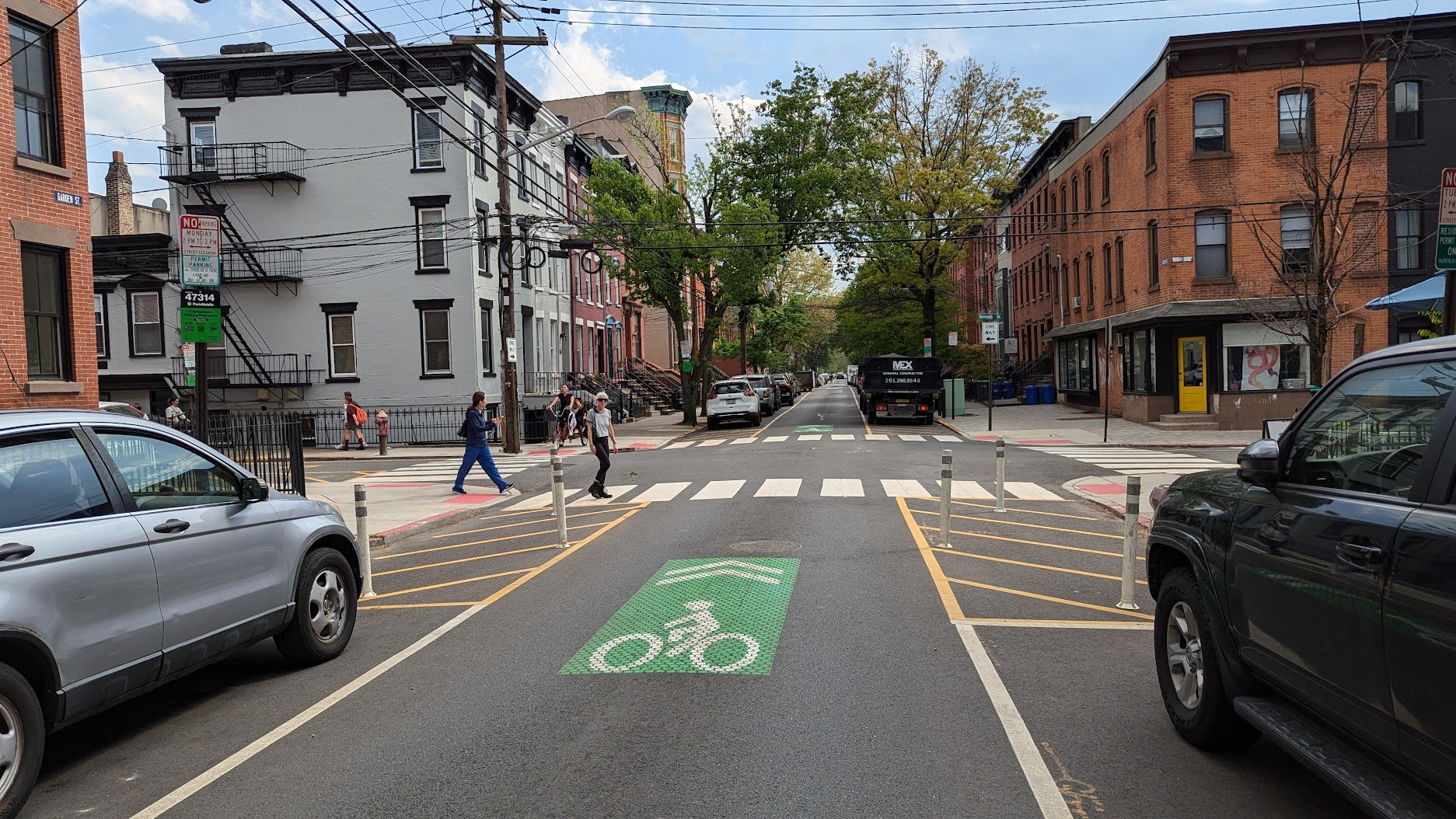
A daylighted intersection in Hoboken where you can clearly see if anybody is approaching the crosswalk.
It's clear to see daylighting 418 intersections (as of 2024) has been a major factor in Hoboken's Vision Zero success. The most common method of daylighting is to stripe the corner parking spaces in yellow and put in plastic bollards.
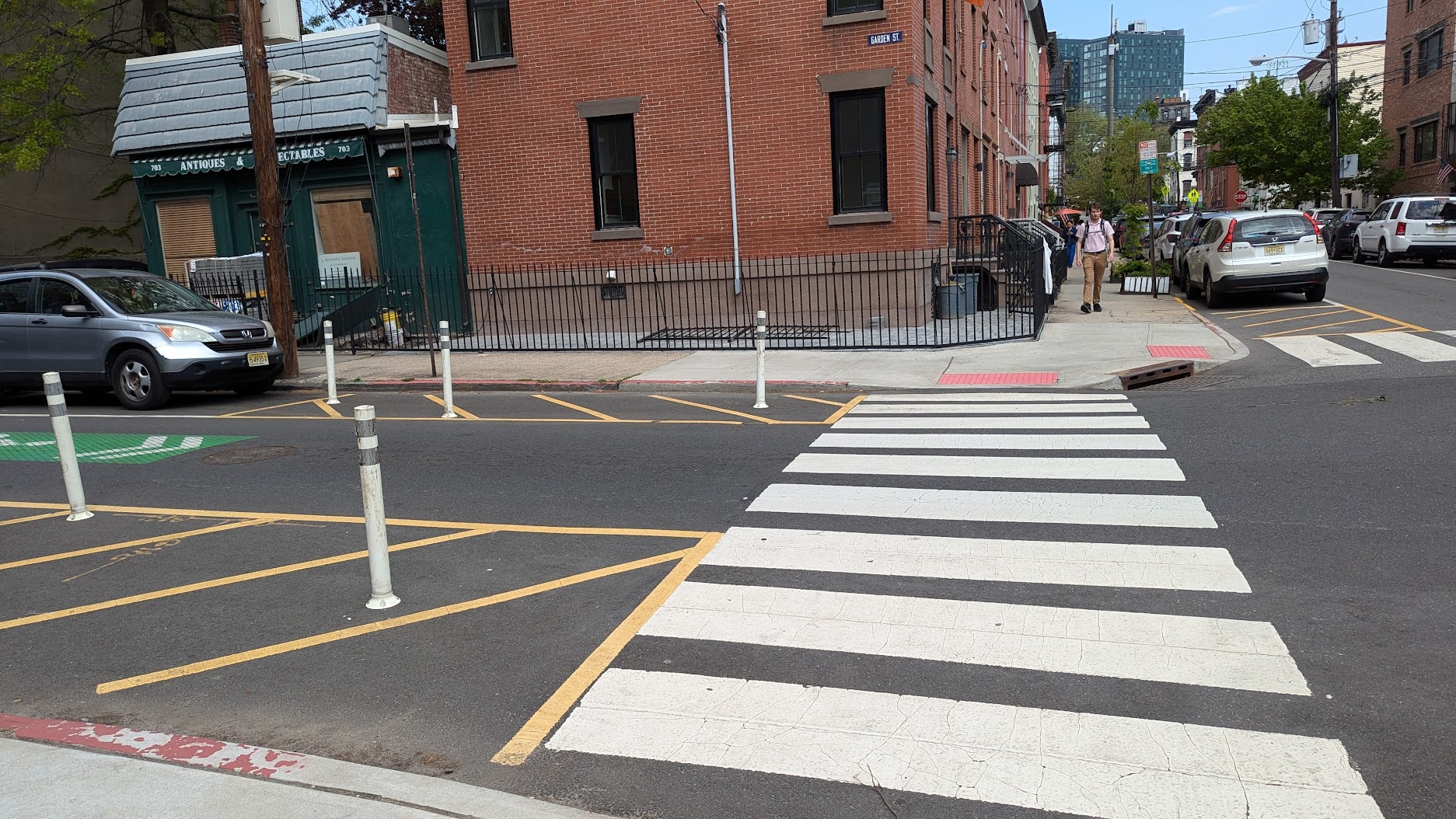
A daylighted intersection in Hoboken with yellow paint and plastic bollards.
Unfortunately, these plastic bollards can easily be driven over. You will often see delivery trucks and moving trucks park over them.
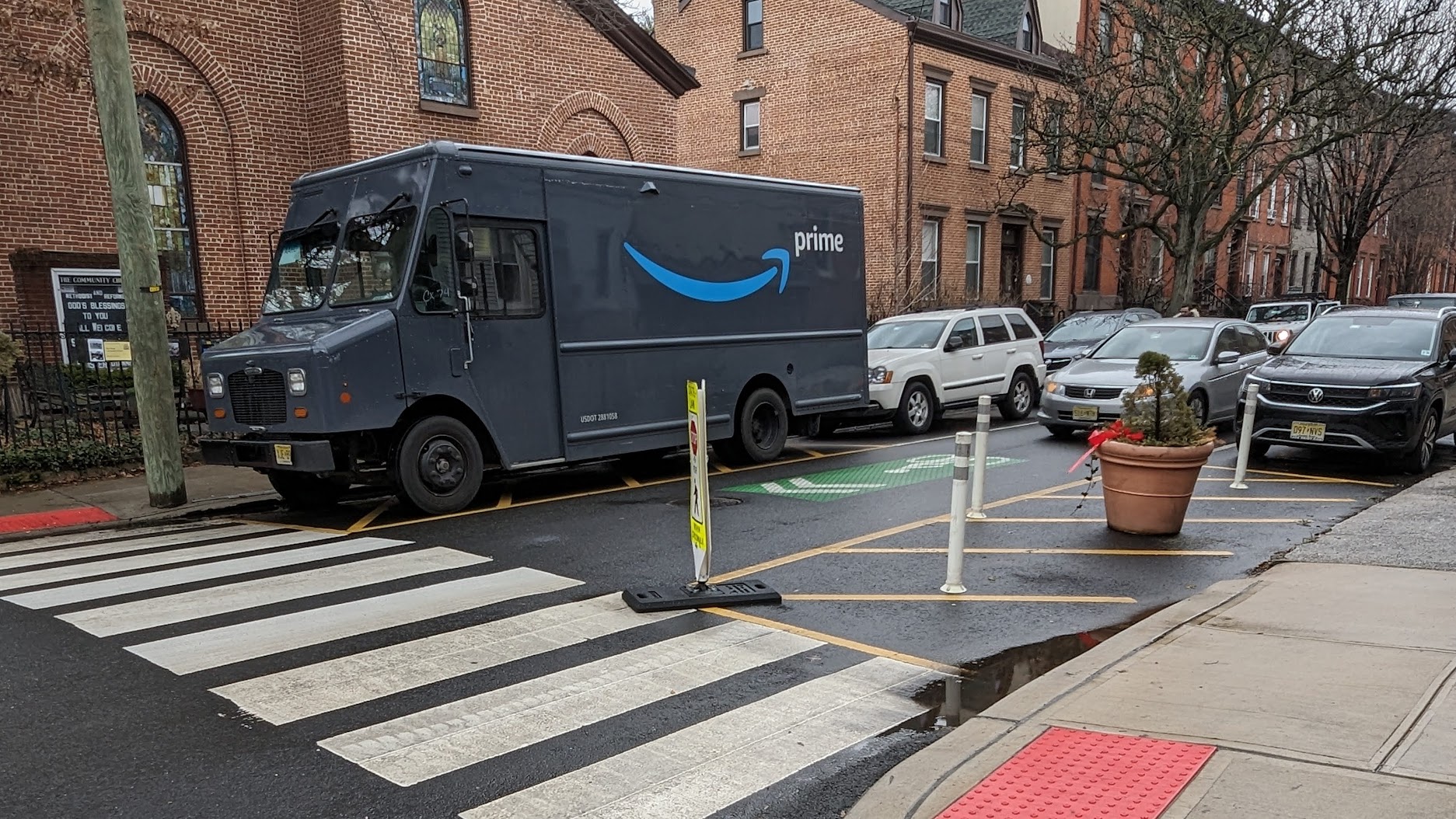
An Amazon truck parked over a daylighted intersection in Hoboken.
Note that the Amazon truck decided to park on the side with the plastic bollards, and not on the side that has a giant pot plant. Each time I walk past this intersection, I notice delivery trucks love to park over the side that is just stripes and bollards, but not the side with the pot plant.
The same intersection from another angle.
Physical obstacles such as benches and planters are effective ways to prevent vehicles from parking in a spot, but paint and bollards are not. This also applies for wanting to keep cars out of bike lanes. Hoboken in notorious for double parking.
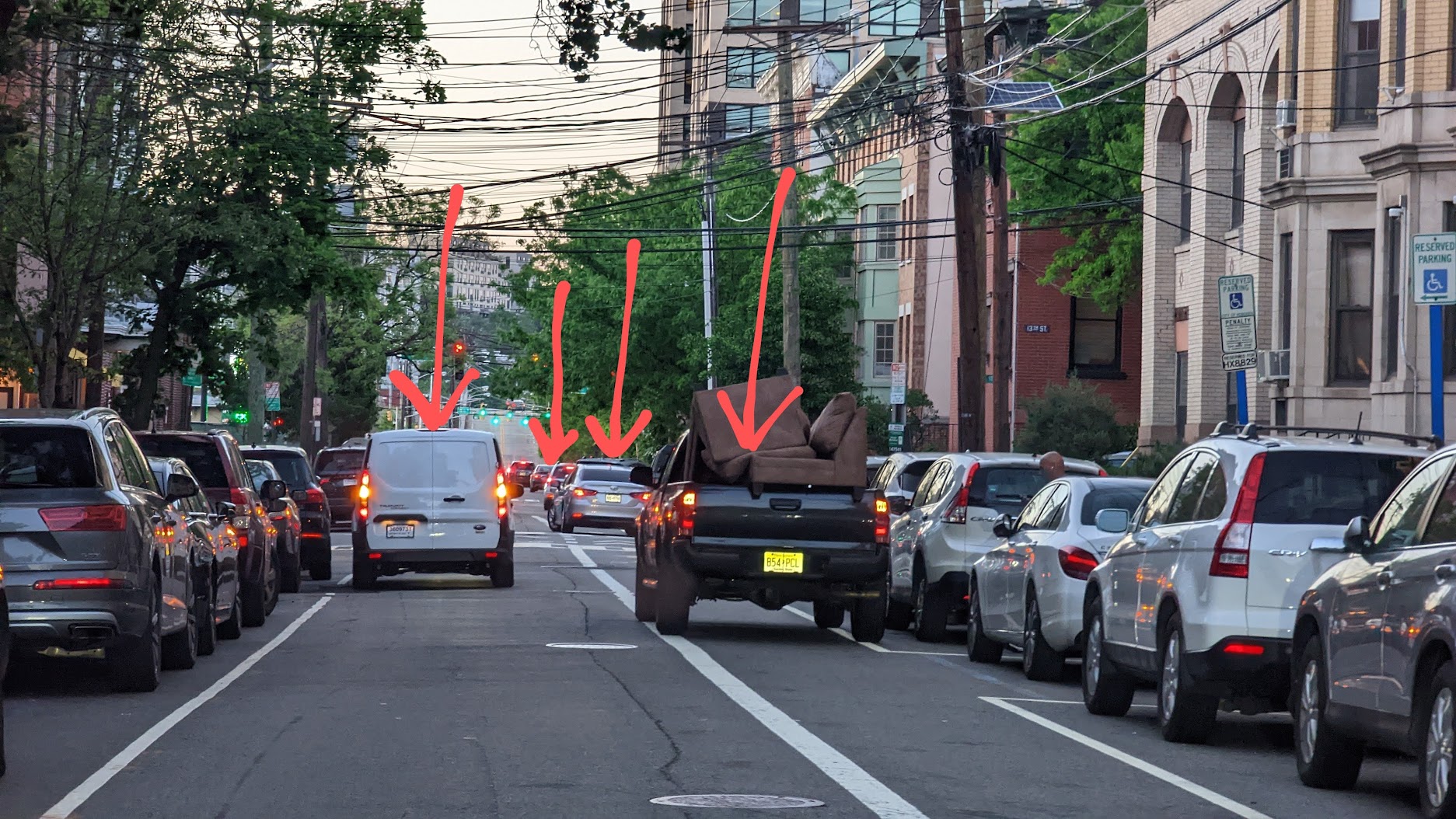
4 double parked cars while driving down a street in Hoboken.
Part of this reason is because of a lack of "loading zone" parking. People complain anytime there is a discussion about parking, but if you dig deeper what they tend to be complaining about is how difficult it is to quickly run into a store for a big catering pick up or a business delivery, not that they want to park their car for hours on end (which we have garages for). Yet, virtually all the cars parked on the interior streets of Hoboken are residential cars sitting there for hours. So, no matter how many or few parking spaces we have on the streets of Hoboken, they will always be filled with long-term residential parking, so people looking for a loading zone will continue to treat the paint as suggestions, which includes cross walks...
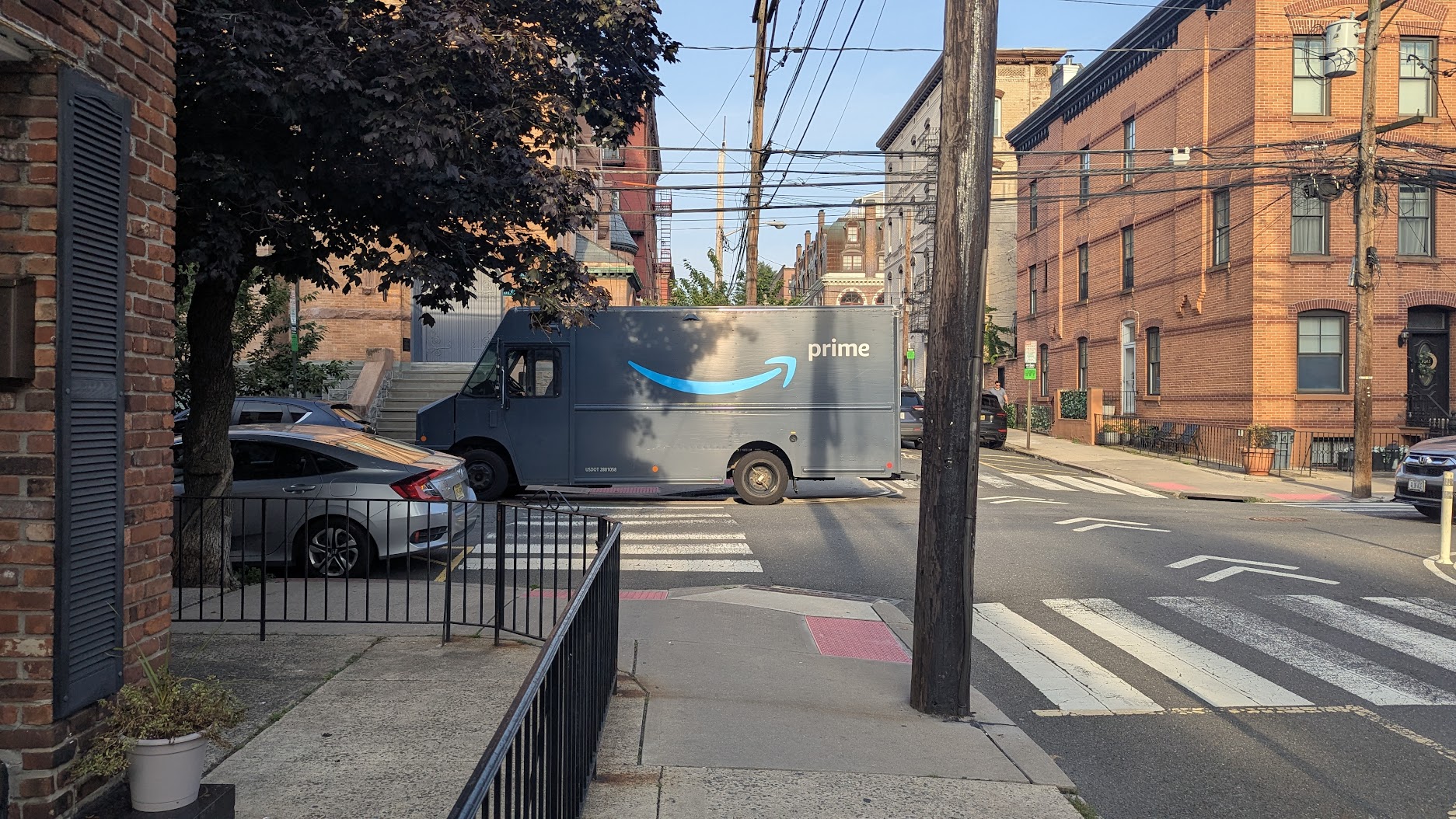
An Amazon Prime truck blocking a crosswalk in Hoboken.
..and bike lanes..
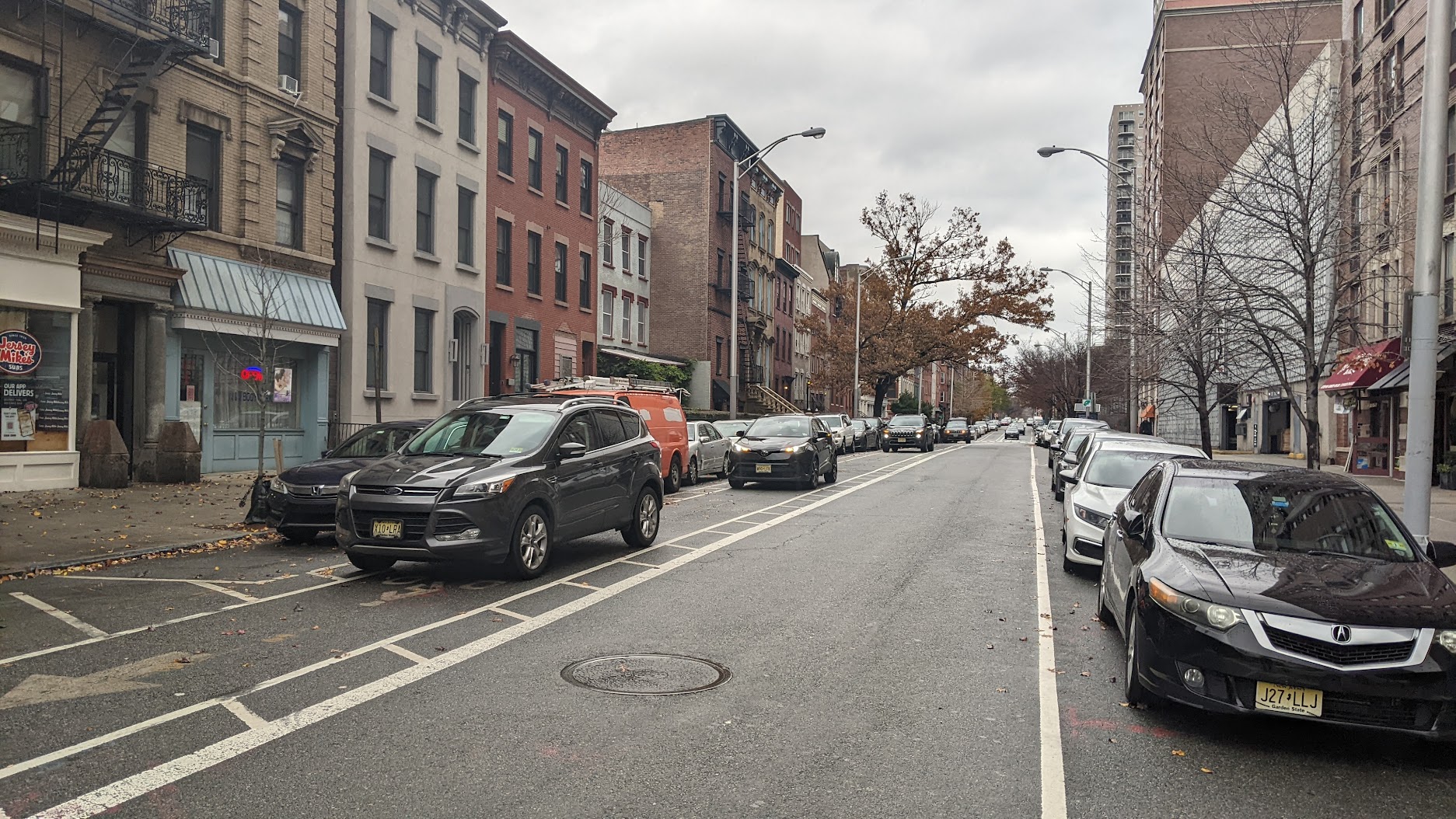
4 double parked cars in a bike lane in Hoboken.
..or wherever there happens to be an opening. These people are often just parking there for a few minutes to run and make a delivery, or pick up a passenger. Although it can seem harmless to park for just a minute to run in qucikly, if you encounter this:
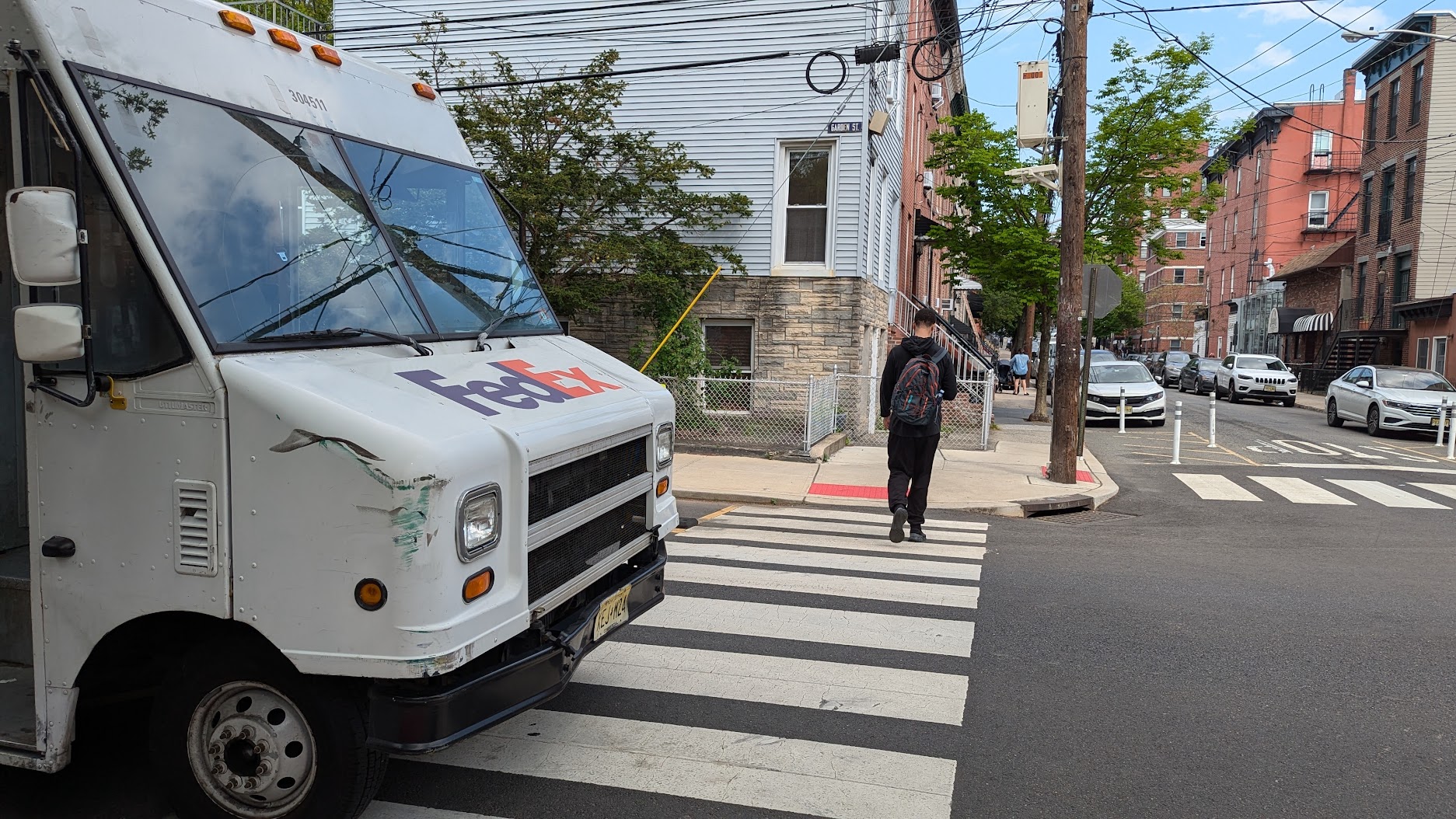
A FedEx truck blocking visibility at a intersection in Hoboken.
...and a car hits you or your child, somebody might die and it doesn't matter if the vehicle was idling there for 20 seconds or 2 hours. No Uber and FedEx driver wants to put anyone in danger, but it's also not the kind of business where you can waste 10 minutes circling around for a parking space 5 blocks away, so it's critical we come up with solutions to prevent vehicles from temporarily stopping in dangerous places, such as allocating mid-block delivery zones.
If we don't account for the loading zone issue, then daylighting can make the situation can be even more dangerous. For example, let's take a non-daylit intersection:

..and do the very minimum to daylight it by painting a 'no parking' zone by the intersection:
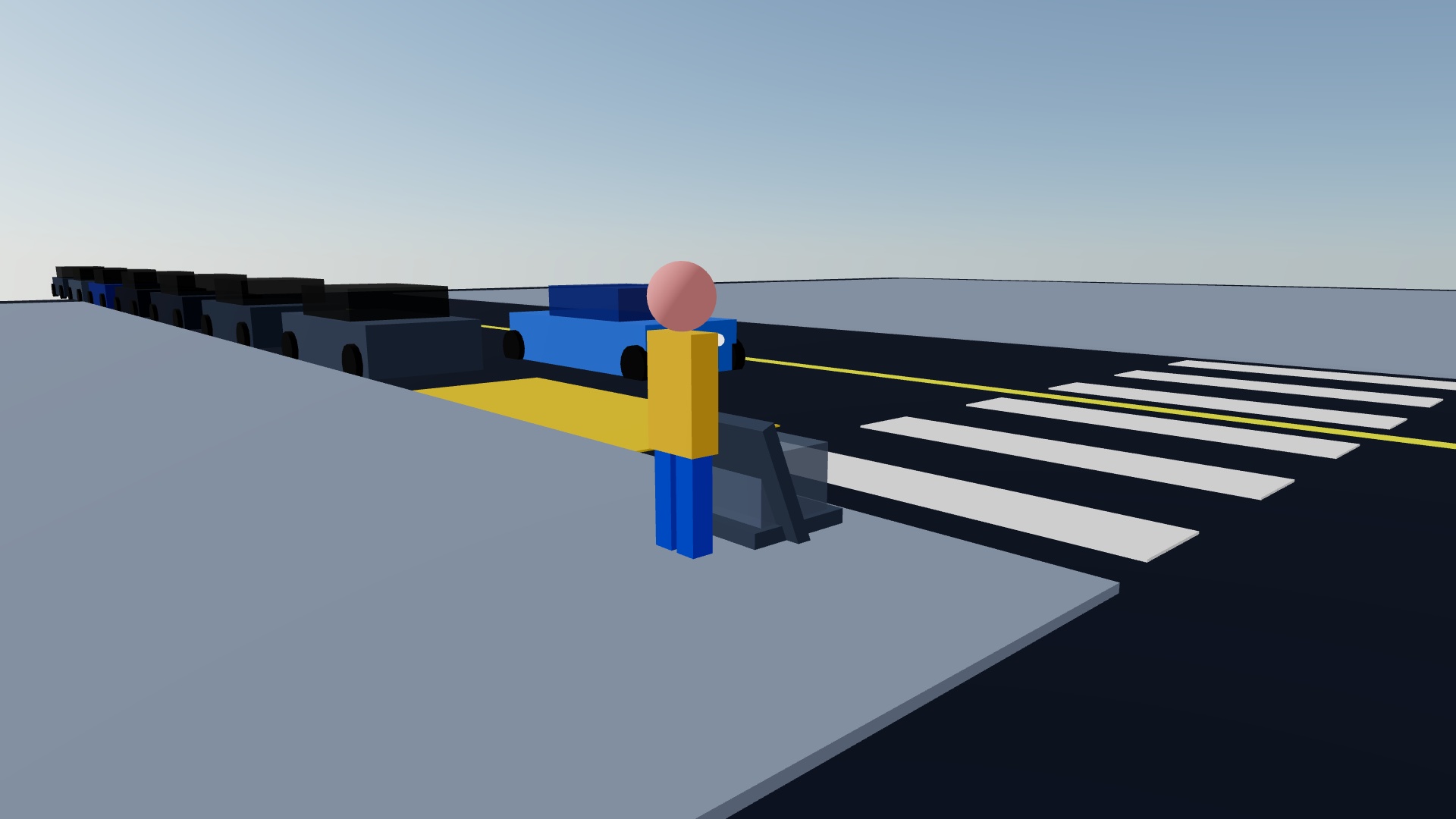
Nobody is parking their long-term, however you now have a empty piece of road space that is going to be very temping for someone to pull into for loading.
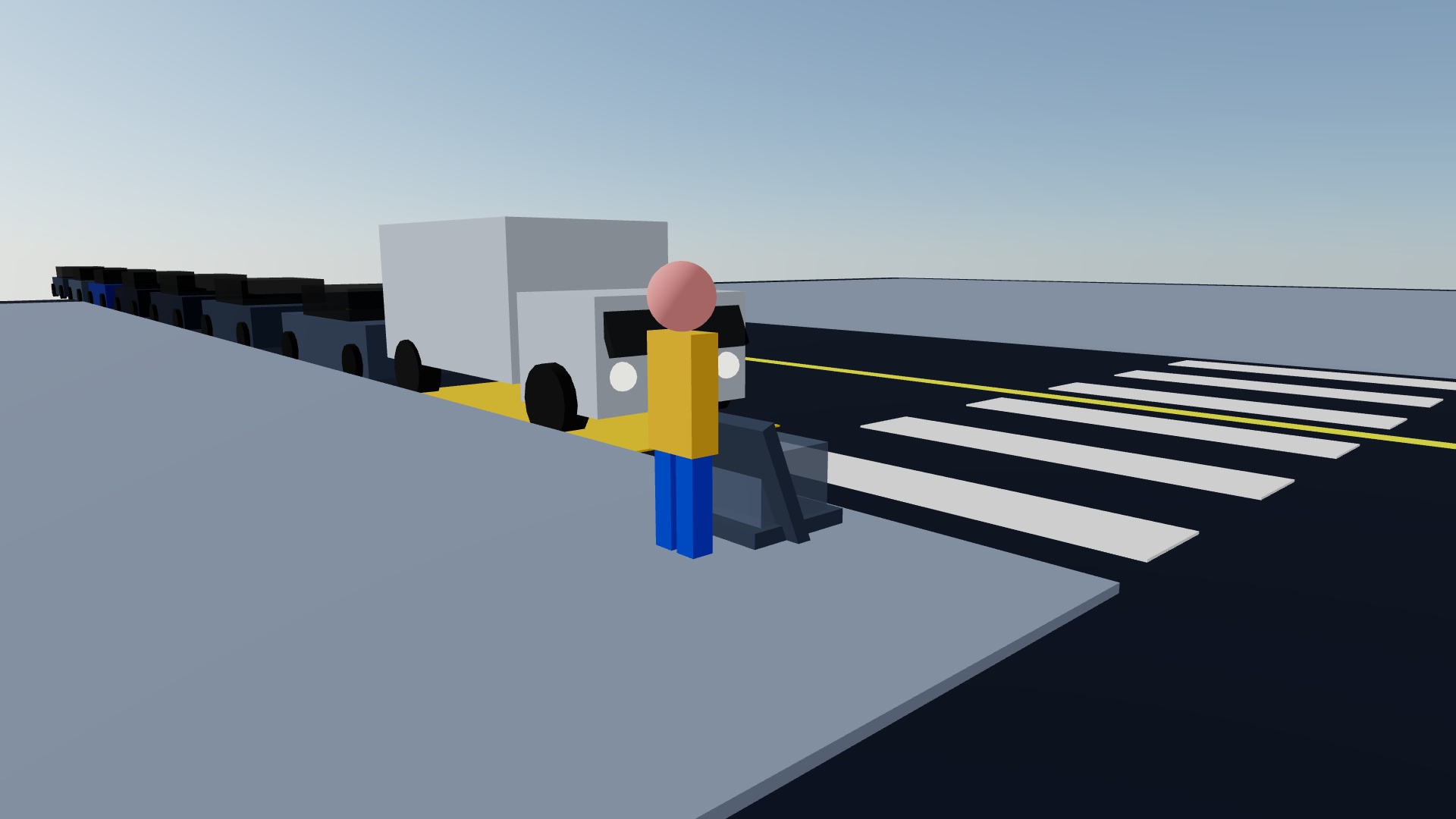
Since it's more likely that the long-term parkers are passenger vehicles, and the short-term parkers are delivery trucks, when a vehicle is here it's more likely to block visibility and we've made the situation more dangerous.
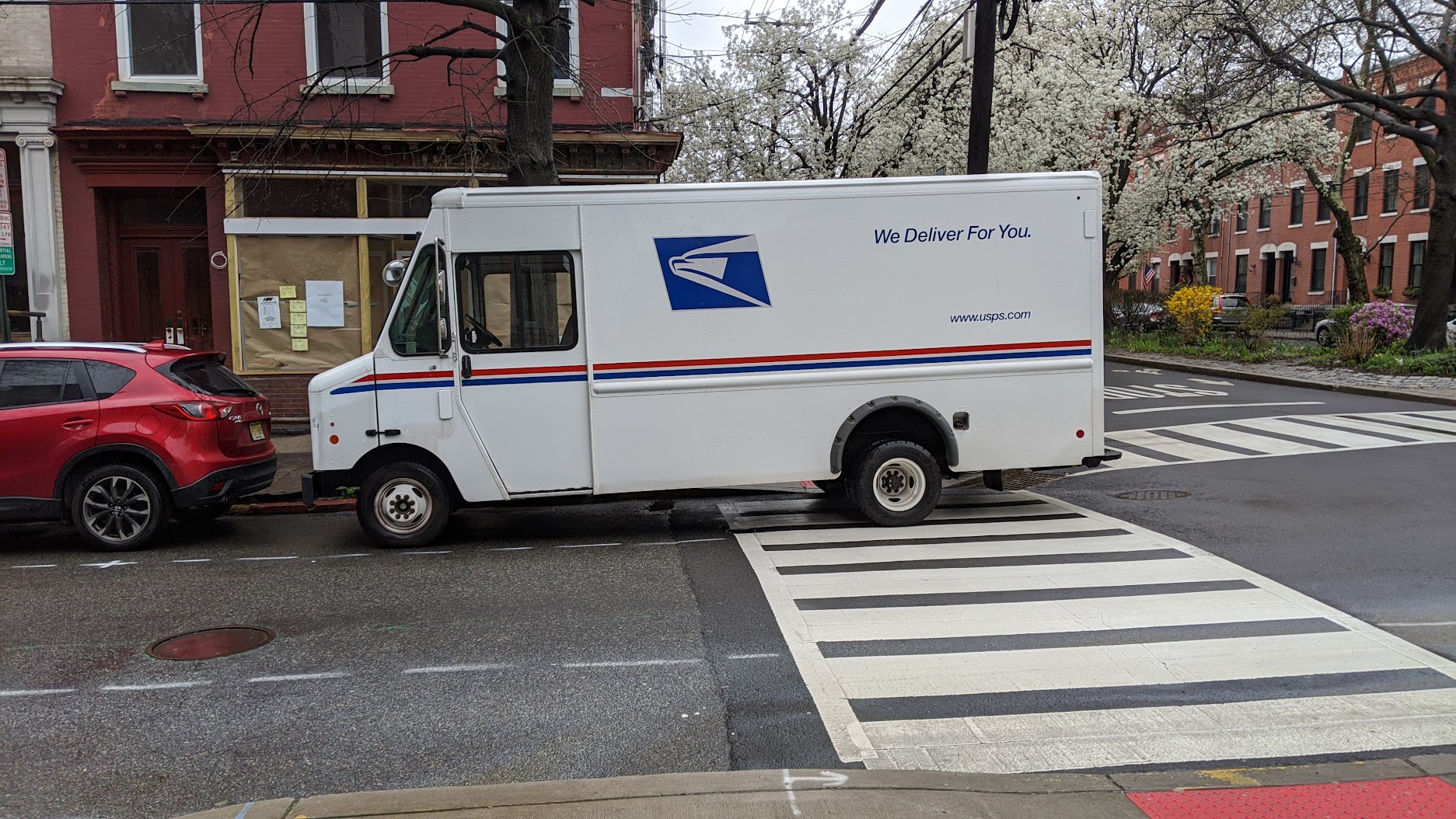
A mail truck blocking the crosswalk in Hoboken.
As we saw earlier, we need some physical object to prevent vehicles from parking in these spots. The object can't be too large like a tree or billboard that it itself blocks visibility.
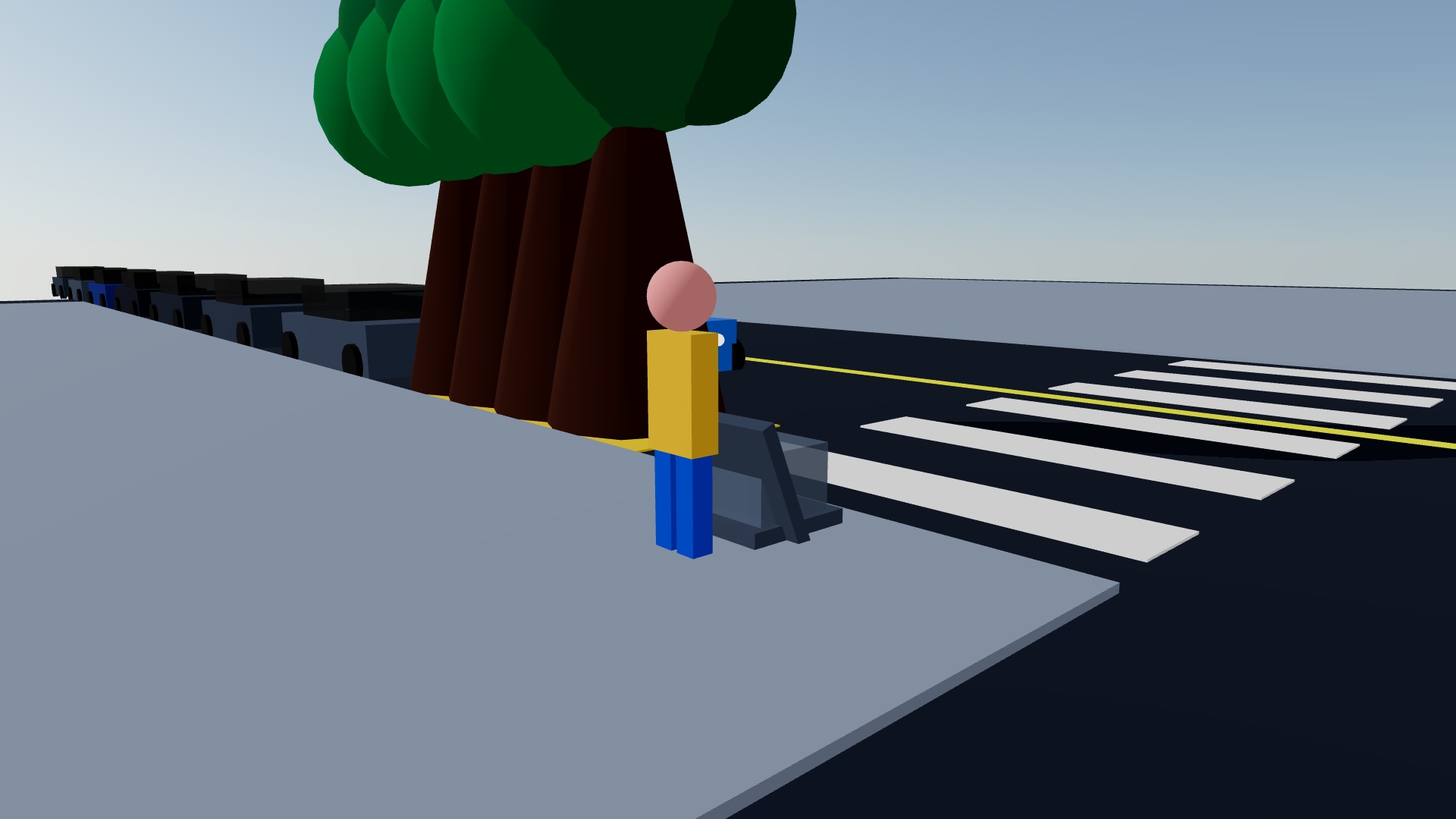
It needs to be something solid, and unmovable, that's between the a typical adult's knee and hip height. Tall enough that it's not something you can drive over, and short enough that it doesn't block the visibility of most children. A raised flower bed would work, while adding some nice greenery.
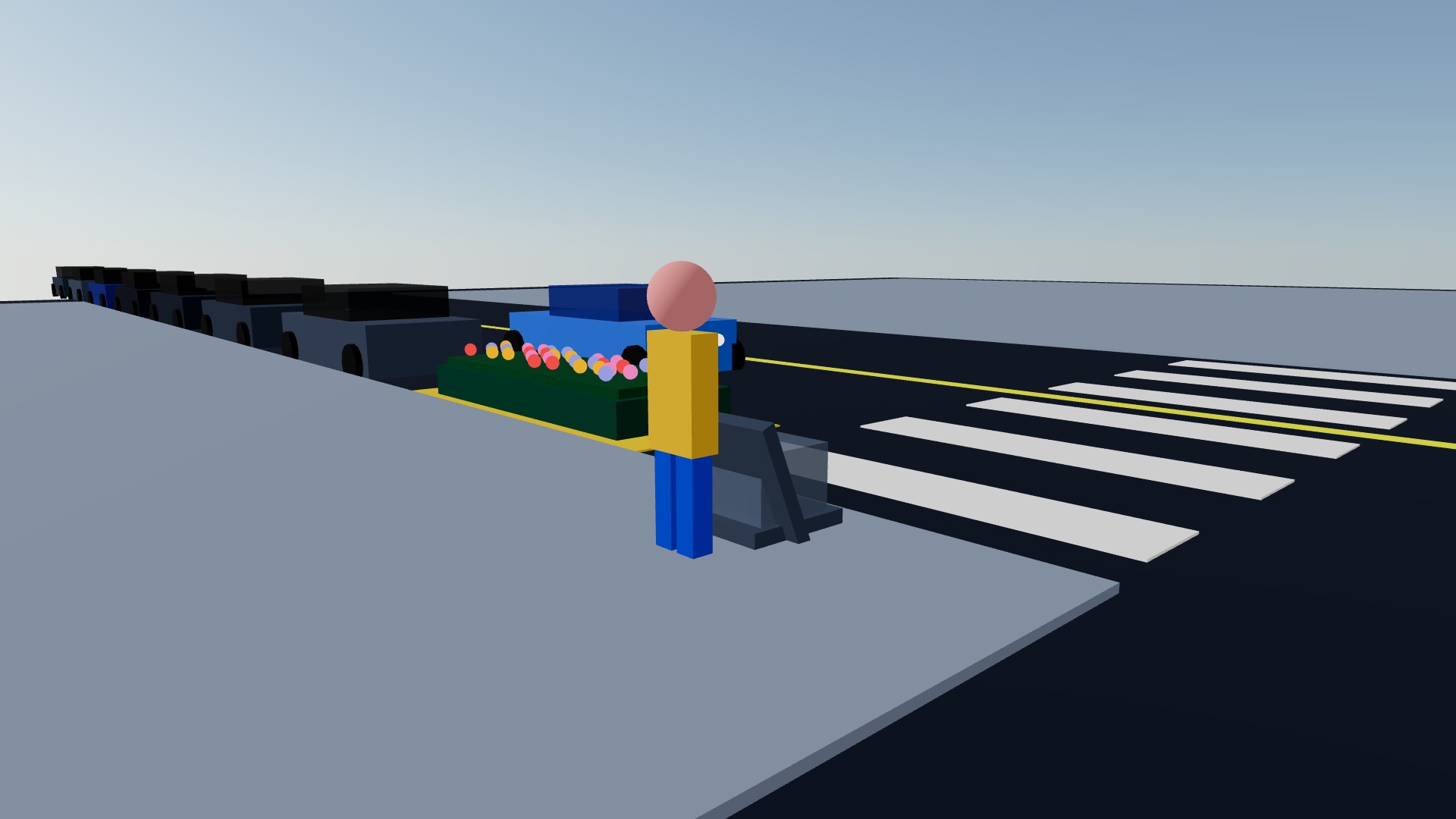
If we want to be cheap and minalist, we could do concrete bollards (not the cheap plastic kinds that break away).
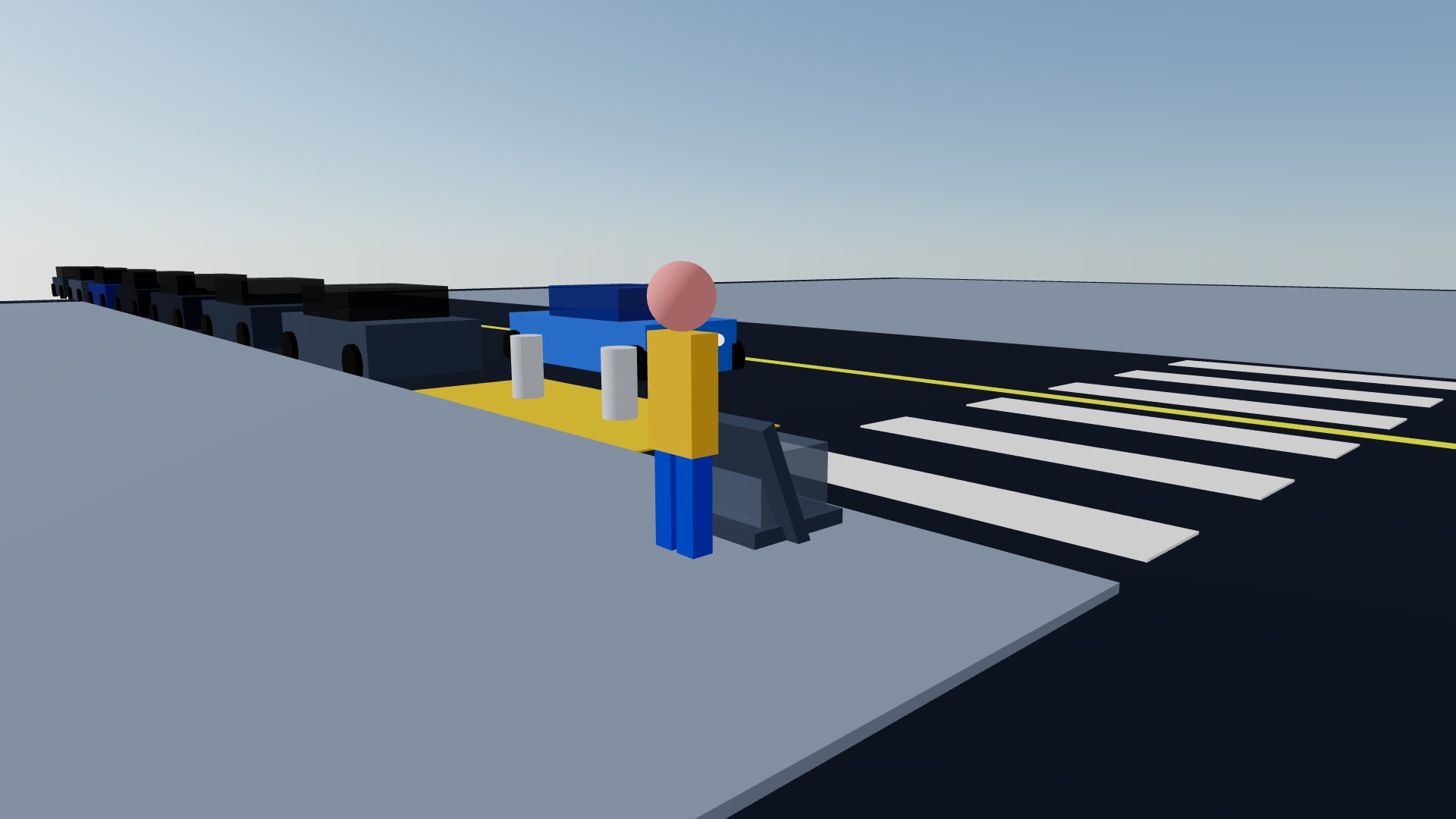
Or, a bike rack:
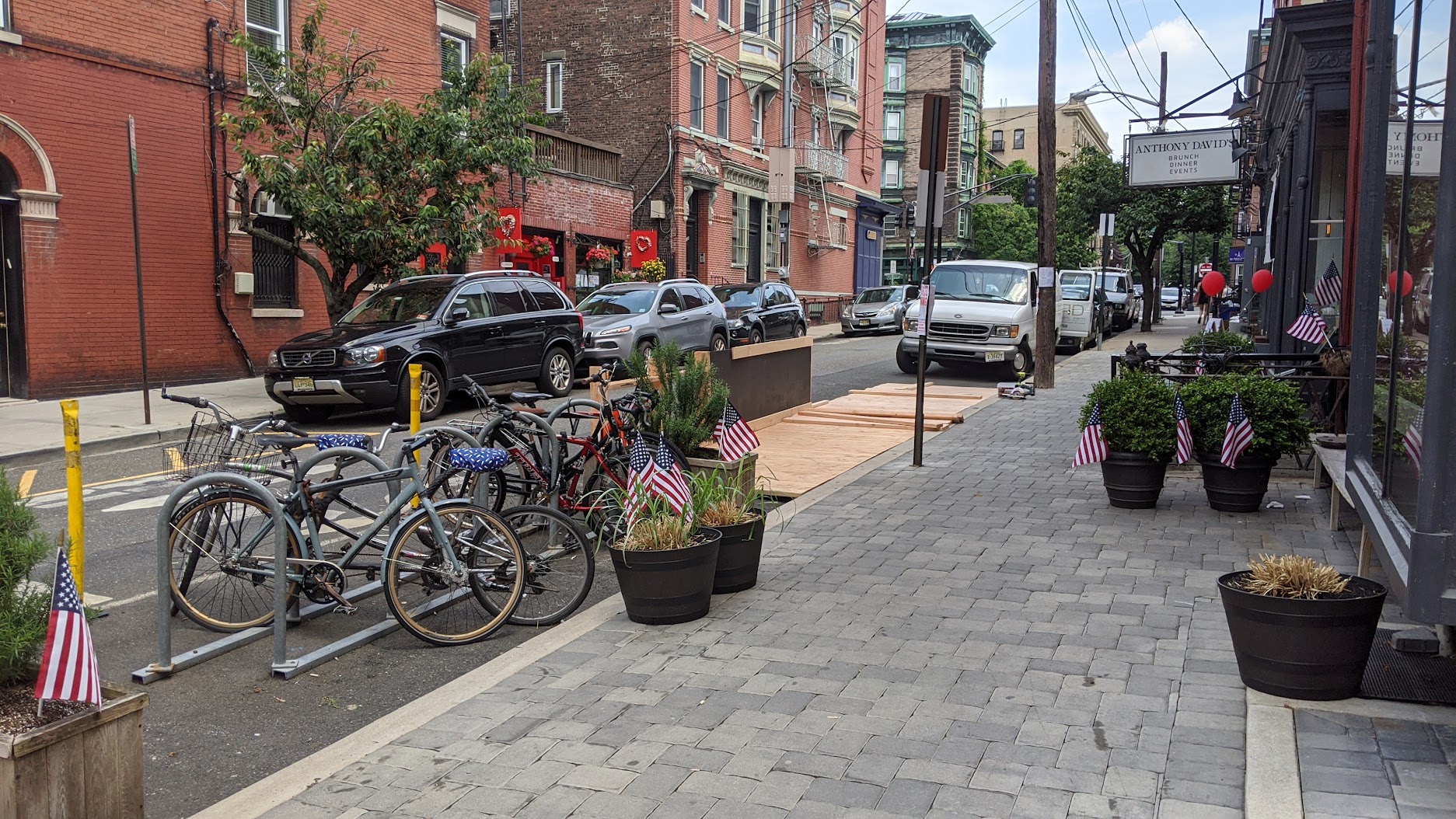
Curb space used for bike racks at an intersection in Hoboken.
Outdoor dining works, as long as it's open and the barriers are low-rise that you can see the traffic.
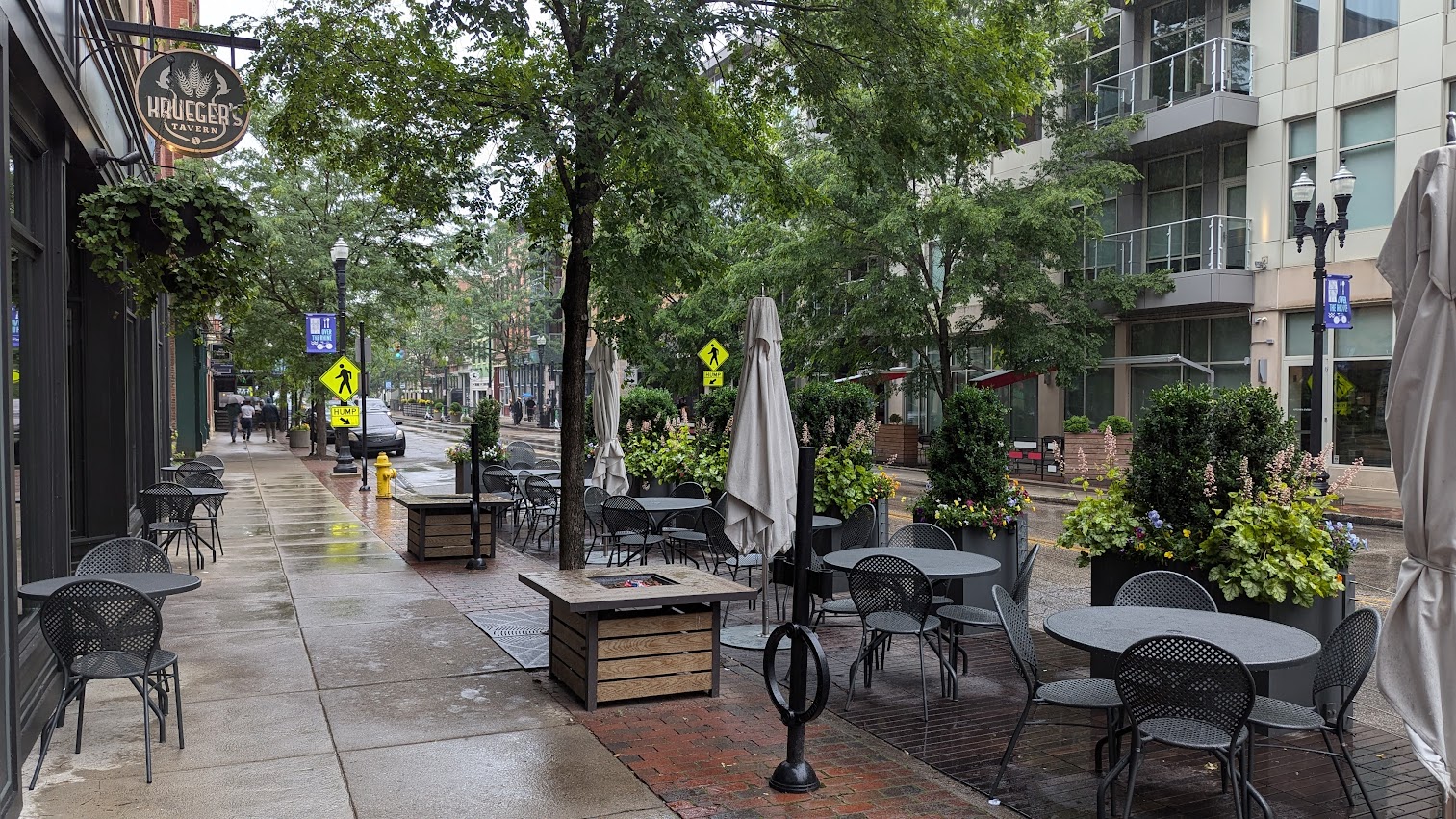
Curb space used as outdoor dining in Cincinatti.
We can even bump out the intersection to both increase visibility and reduce the distance you have to walk to cross.
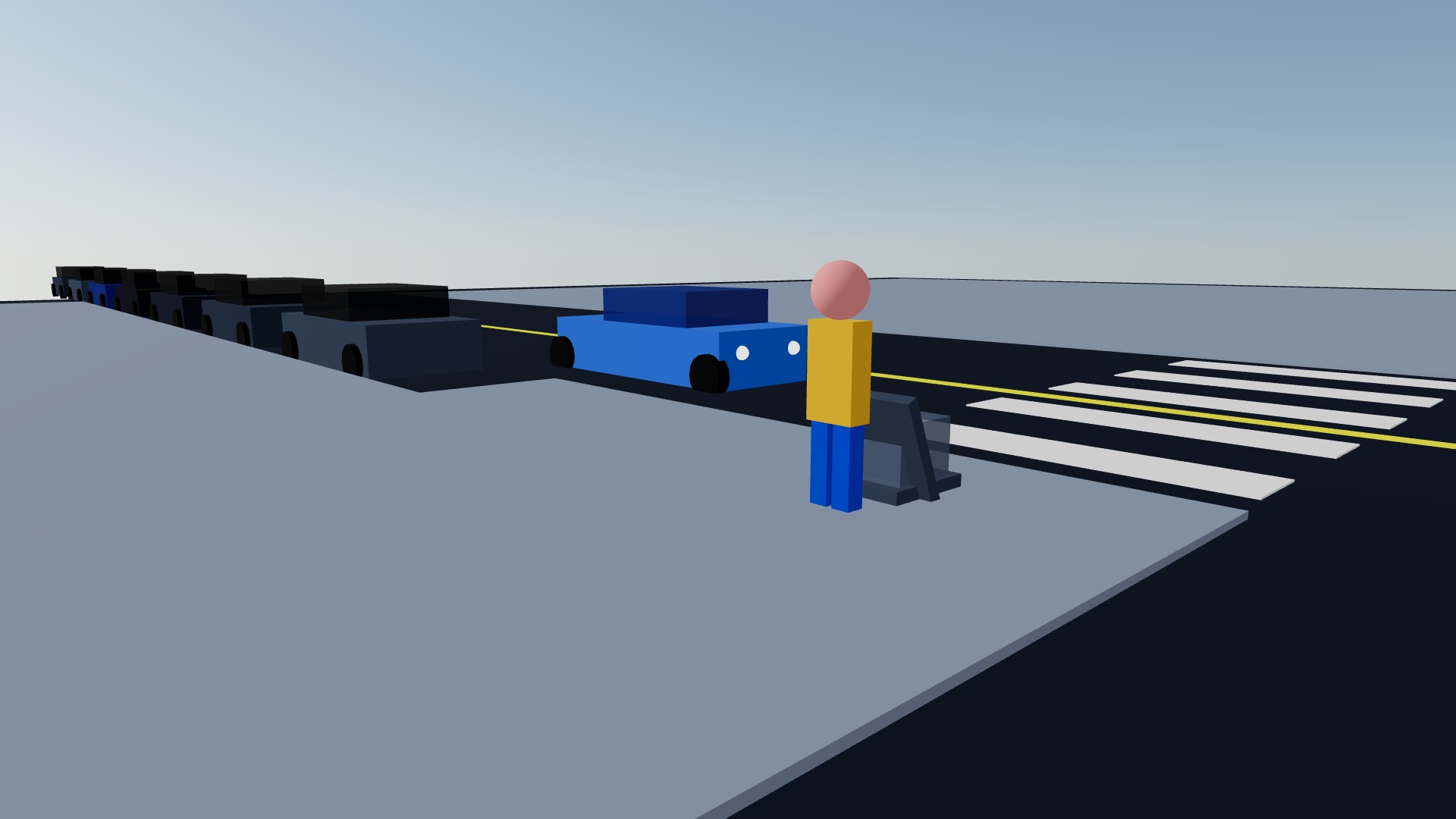

A Hoboken sideswalk that is extended out to minimize the distance to cross while simultaniously daylighting the intersection.
A common objection I hear to moving the curb is because the curb is integrated into the drainage system, moving the curb would require re-doing the entire street's drainage system. We know this isn't true. There are plenty of curb extensions that keep the drainage infrastructure intact, such as leaving a little channel:
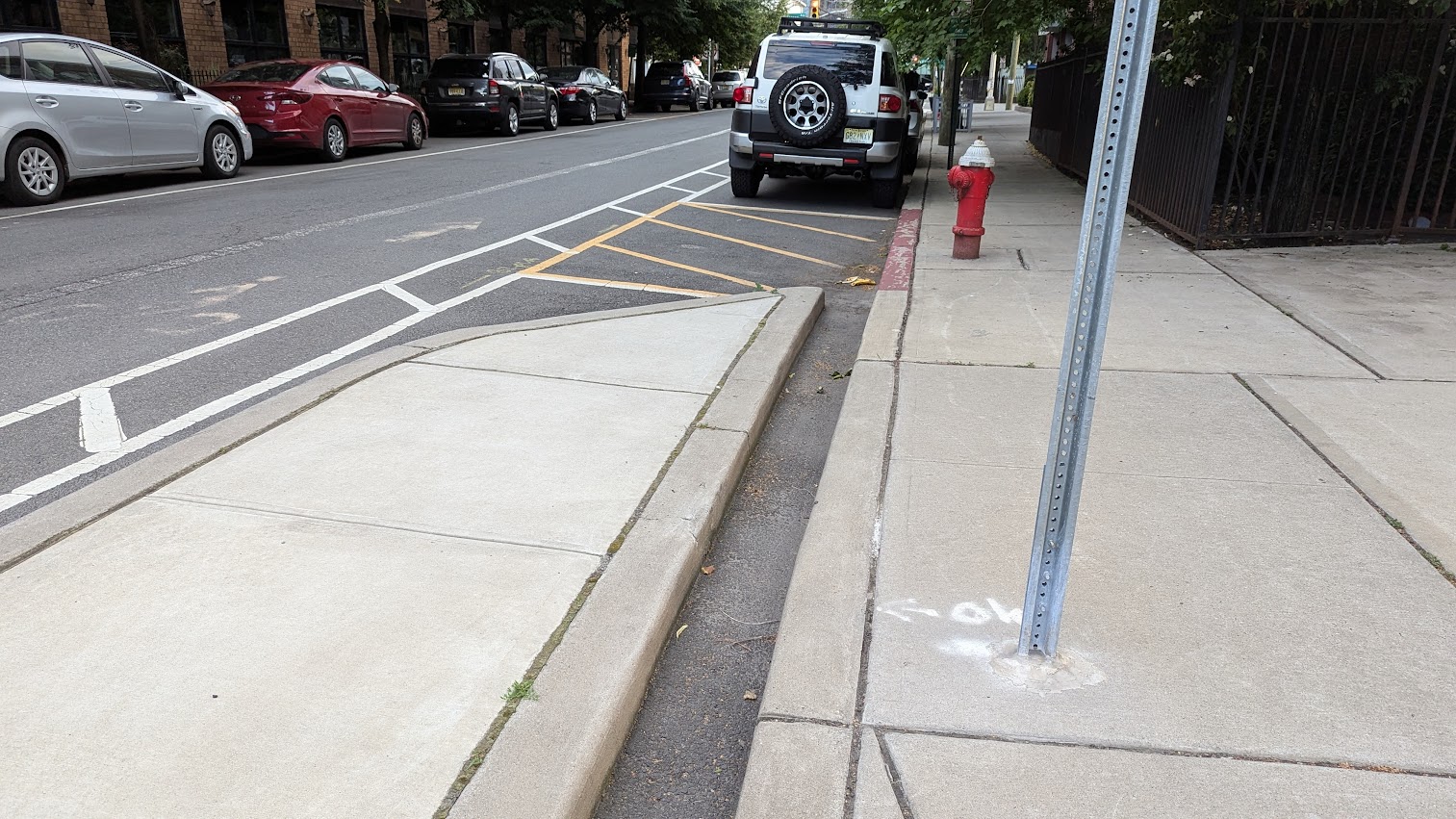
A Hoboken sidewalk that is extended out, but leaving an open channel for water drainage.
You could be creative with the design, put a little ramp over where people will walk, and make it look nicely integrated.
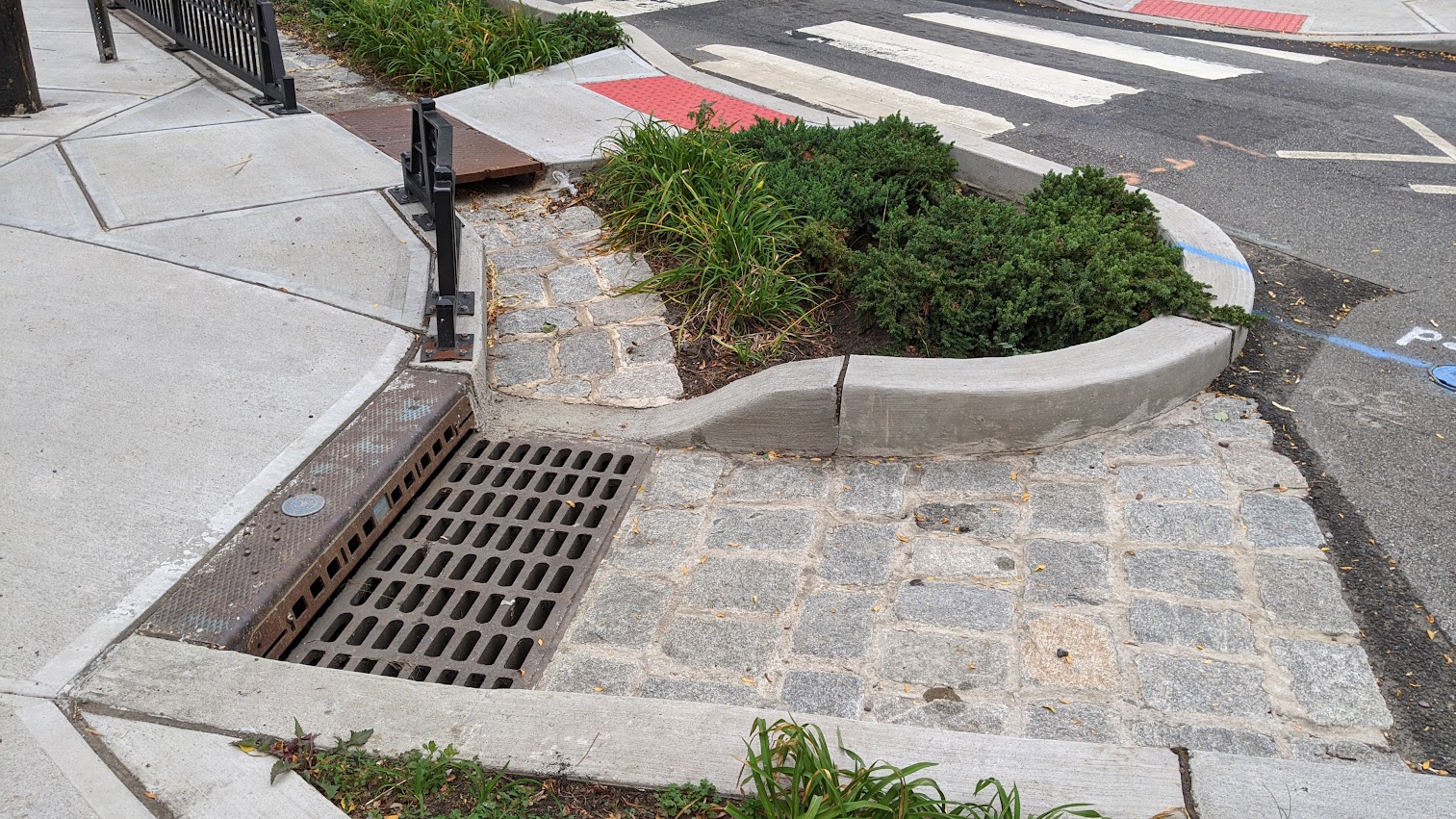
A Hoboken sidewalk that is extended out with landscaping and a ramp to walk over.
Or make it a raised island with a wider opening that is too narrow for cars, but could let bycicles through.
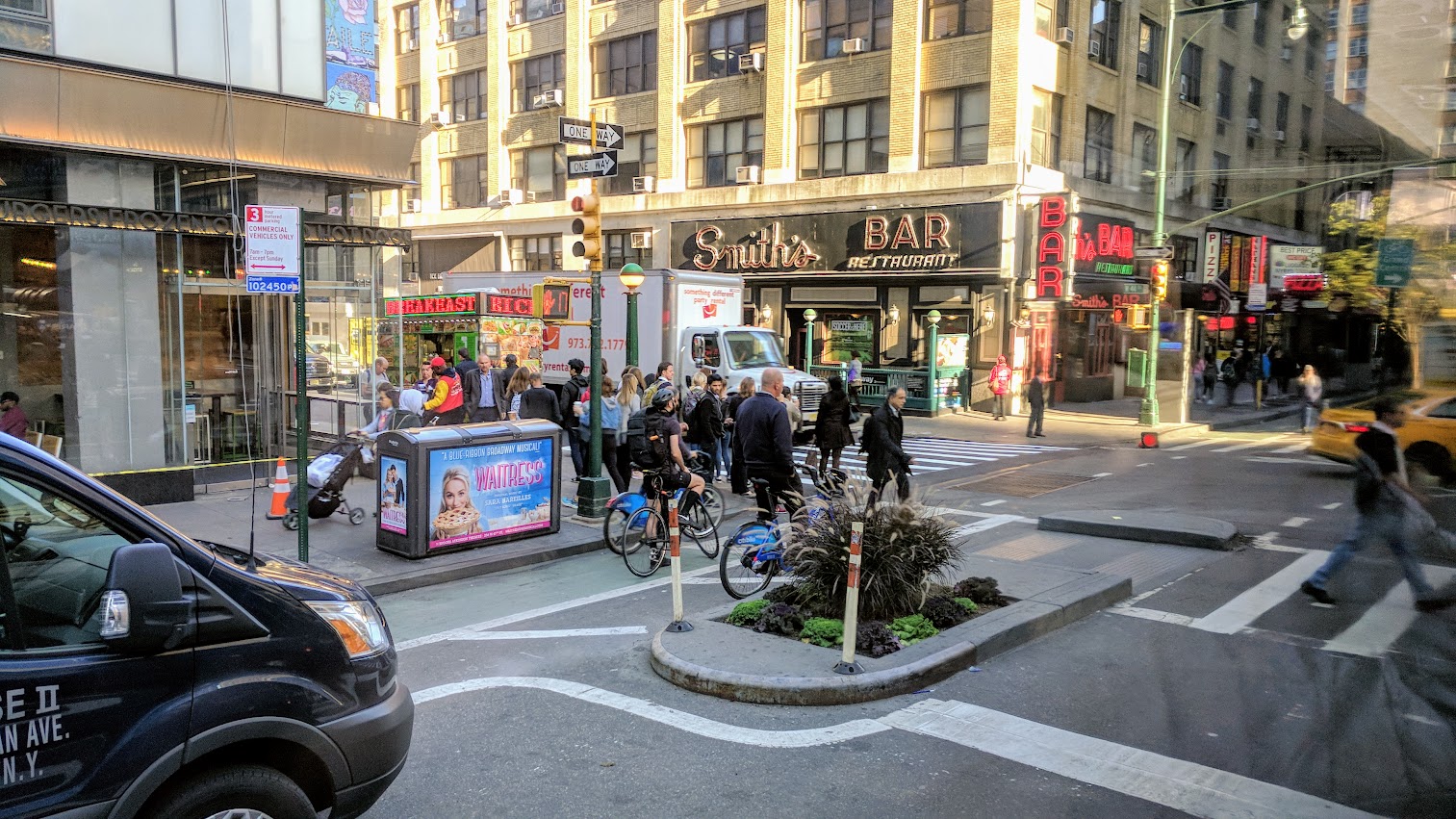
A curb extension in Manhattan with a bike lane running through it.
Or, you could do some kind a raised porous extension. I have seen rubber curb extensions at bus stops...
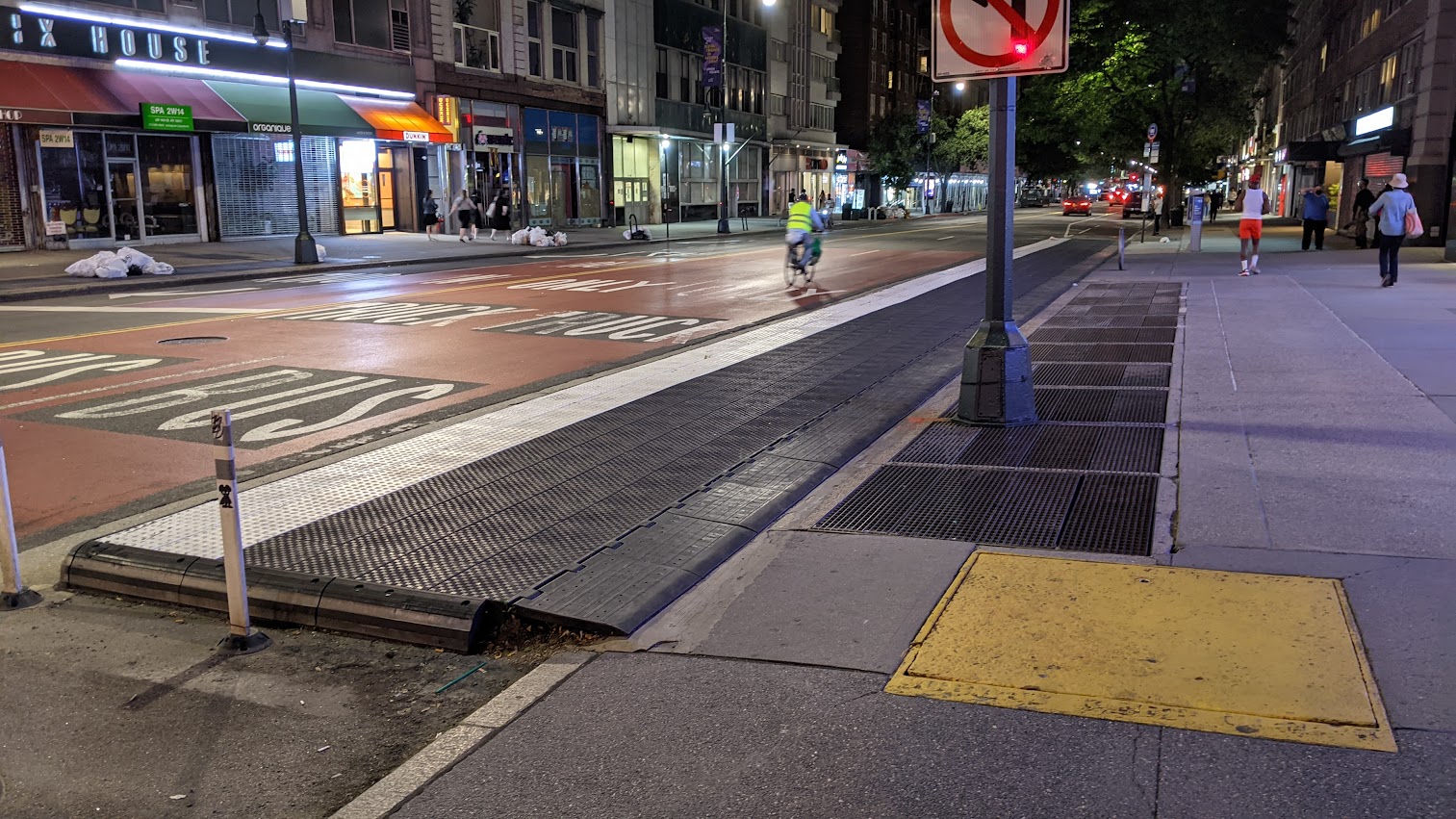
A rubber curb extension at a bus stop in Manhattan.
...but you could use the same material to bump out a curb. The problem though, is the less permanent and more 'flat' it feels, the more likely it's going to treated as a loading zone. As we've stated earlier, loading zones at corners are dangerous, because we've moved regular passenger vehicles out of the way, and now there's just a clearence for much larger short-term vehicles to park there instead.
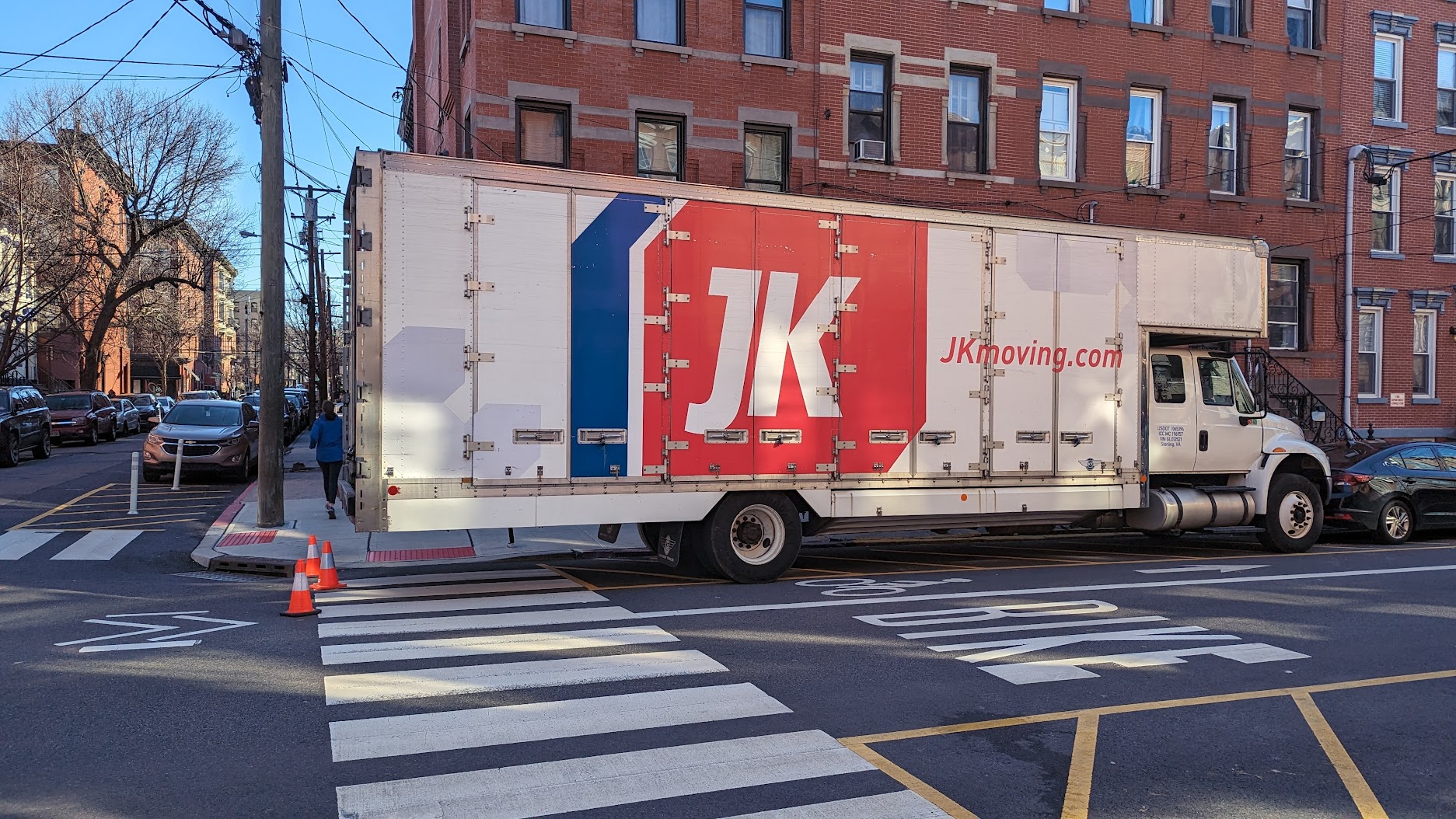
A moving truck blocking a crosswalk in Hoboken.
These have been my experiences living in Hoboken and watching how Vision Zero has played out. Daylighting intersections has been one of the most critical ways which we have avoided traffic deaths. I walk these streets daily and I have seen how it has been done both poorly, and done well.
With that being said, are two things we need to do for daylighting to be effective:
- Install physical barriers (not just paint and plastic bollards) to prevent vehicles from parking close to intersections.
- Dedicate loading zones along blocks to accommodate deliveries and pickups, that can't be used for long term parking, so there is always free space and drivers aren't tempted to park in dangerous places.